
Your skin is one of the most telling indicators of your overall health, yet most people have never stopped to truly figure out what type of skin they have. Pick the wrong cleanser, and you might strip your skin of the oils it needs. Choose the wrong moisturizer, and you could end up breaking out. The truth is, effective skincare starts with one foundational step: knowing your skin type.
This guide walks you through everything you need to know—from the four core skin types and the Fitzpatrick Scale to at-home tests and routine-building tips—so you can make smarter, more informed skincare decisions.
Why Your Skin Type Matters More Than You Think
Most people reach for skincare products based on marketing or recommendations from friends. But what works for someone else may not work for you. Your skin type determines how it responds to different ingredients, environmental conditions, and even hormonal changes.
According to the American Academy of Dermatology (AAD), the five primary skin types are oily, dry, normal, combination, and sensitive. Each type has unique characteristics, and using products designed for a different type can do more harm than good.
There’s also a common misconception worth addressing: skin type and skin condition are not the same thing. Dehydration, acne, and redness are conditions—temporary states your skin may cycle through. Skin type, on the other hand, is a more stable characteristic largely determined by genetics.
The Four Core Skin Types: Identifying Your Category
Oily Skin
Oily skin is driven by an overproduction of sebum—the skin’s natural oil—from the sebaceous glands. Stress, genetics, humidity, and fluctuating hormones can all trigger excess oil production.
Key signs:
- A shiny or greasy appearance, especially in the T-zone (forehead, nose, and chin)
- Enlarged or visible pores
- Frequent blackheads or acne breakouts
One upside? According to the AAD, people with oily skin may develop fewer wrinkles over time. For care, opt for oil-free, non-comedogenic cleansers and lightweight, gel-based moisturizers.
Dry Skin
Dry skin produces less sebum than other types, which means it struggles to retain moisture. A compromised skin barrier is often at the root of the issue, allowing water to escape too quickly.
Key signs:
- Tight, rough, or flaky texture
- Dull or ashy appearance
- Sensitivity or itchiness after cleansing
Look for products rich in ceramides, hyaluronic acid, and glycerin. Thicker creams—rather than thin lotions—tend to be more effective for restoring moisture in dry skin.
Combination Skin
Combination skin is exactly what it sounds like: a mix of oily and dry zones on the same face. Typically, the T-zone runs oily while the cheeks stay dry or normal.
Key signs:
- Shine concentrated around the forehead, nose, and chin
- Dry or rough patches on the cheeks
- Skin behavior that shifts with the seasons or hormonal cycles
Caring for combination skin often means using different products on different areas—a gel moisturizer on oily zones and a richer cream on drier patches.
Normal Skin
Normal skin sits in a comfortable middle ground. It’s neither too oily nor too dry, and it’s generally not prone to sensitivity or breakouts.
Key signs:
- Balanced hydration across the entire face
- Small, less-visible pores
- Smooth texture and even tone
Even normal skin benefits from a consistent routine. Moisturizers with ceramides and hyaluronic acid help maintain its natural balance, and non-comedogenic formulas reduce the risk of breakouts.
The Fitzpatrick Scale: Skin Tones and Sun Sensitivity
The Six Skin Phototypes
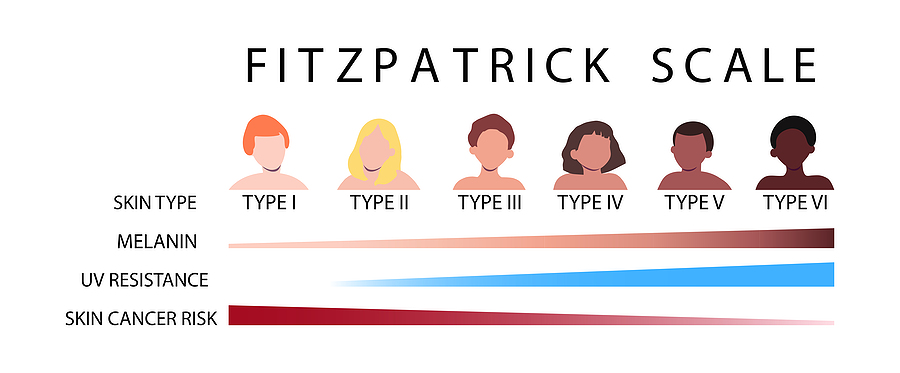
The Fitzpatrick Scale is a dermatological tool that classifies skin into six phototypes based on pigmentation and how skin responds to UV exposure. Developed for assessing skin cancer risk, it’s also widely used in tanning and cosmetic contexts.
| Type | Characteristics | Sun Response |
|---|---|---|
| Type I | White skin, blonde/red hair, green eyes, freckles | Always burns, never tans |
| Type II | White skin, blonde hair, green/blue eyes | Always burns, rarely tans |
| Type III | White skin, blonde/brown hair, blue/brown eyes | Burns first, then tans |
| Type IV | Brown skin, hair, and eyes | Rarely burns, tans easily |
| Type V | Dark brown skin, brown/black hair and eyes | Very rarely burns, tans readily |
| Type VI | Black skin and hair, brown/black eyes | Never burns, deeply pigmented |
Why the Fitzpatrick Scale Is Crucial for Tanning and Sun Protection
Regardless of where you fall on the Fitzpatrick Scale, sunscreen is non-negotiable. However, your phototype does influence how you approach sun exposure and indoor tanning. Those with Type I or II skin face the highest risk of UV damage and skin cancer, and should use high-SPF sunscreens year-round. Types V and VI carry a lower burn risk but are not immune to UV-related damage.
For indoor tanning enthusiasts, the Fitzpatrick Scale is particularly relevant. Knowing your phototype helps tanning professionals customize session times and product recommendations to suit your skin safely.
Two At-Home Tests to Pinpoint Your Skin Type
You don’t need a dermatologist to get a good read on your skin type. These two simple methods can help you figure it out at home.
The Bare-Face Method
- Wash your face with a gentle cleanser and pat it dry
- Leave your skin bare—no serums, moisturizers, or treatments
- Wait 30 minutes and observe
- What to look for: All-over shine suggests oily skin. Tightness and flaking point to dry skin. Shine only in the T-zone signals combination skin. A comfortable, hydrated feeling with no visible oil or dryness suggests normal skin.
The Blotting Sheet Method
- Cleanse your face and wait 30 minutes
- Press blotting sheets onto different areas of your face
- Hold each sheet up to a light source to check oil markings
- What to look for: Sheets saturated with oil from all areas indicate oily skin. Little to no oil suggests dry skin. Oil only from the T-zone points to combination skin. Minimal oil across the board means normal skin.
Tailoring Your Skincare Routine to Your Skin Type
Cleansers: Choosing the Right Formula
- Oily skin: Foaming or gel cleansers that remove excess oil without over-stripping
- Dry skin: Hydrating, cream-based cleansers that preserve the skin’s natural moisture barrier
- Combination skin: Gentle, balanced cleansers that don’t aggravate either zone
- Normal skin: Mild, fragrance-free cleansers that maintain equilibrium
- Moisturizers: Hydration for Every Skin Type
Every skin type—yes, including oily—needs a moisturizer. The key is choosing the right texture. Lightweight gels work well for oily skin, while thick creams are better suited for dry skin. Combination skin benefits from a zonal approach: gel on the T-zone, cream on drier areas.
Serums and Treatments: Targeted Solutions
Serums offer a chance to address specific concerns beyond your basic type. Hyaluronic acid serums add deep hydration for dry skin. Niacinamide helps regulate sebum production in oily skin. Vitamin C brightens and protects for normal or combination types.
Debunking Skin Type Myths
Skin Type vs. Skin Condition
Acne, redness, and dehydration are often mistaken for skin types. In reality, these are conditions—they can occur in any skin type and are often triggered by external factors like diet, stress, or incorrect product use. Treating a condition without considering your underlying skin type is a common skincare mistake.
Can Your Skin Type Change Over Time?
Yes, it can. Hormonal shifts, aging, climate changes, and lifestyle factors all influence how your skin behaves. As noted by board-certified dermatologist Dr. Nkem Ugonabo of CeraVe, some people find their skin becomes less oily as they age or when they move to different environments. Revisiting your skin type periodically—especially after major life changes—is a good habit.
Frequently Asked Questions
How often should I re-evaluate my skin type?
Once or twice a year is a good starting point. Major life changes—pregnancy, menopause, a new climate, or a significant shift in diet—can alter your skin’s behavior and warrant a reassessment sooner.
Does diet affect my skin type?
Diet influences skin condition, not skin type. That said, poor hydration and diets high in processed foods or sugar can worsen oiliness, dryness, and inflammation. A balanced diet supports healthier skin regardless of your type.
Can men and women have different skin types?
Yes. On average, men’s skin tends to be oilier and thicker due to higher testosterone levels, which stimulates more sebum production. Both men and women can have any of the four core skin types, but hormonal differences do play a role.
Build Your Best Skin Routine Starting Today
Knowing your skin type is the starting point for every skincare decision you’ll ever make. Whether you’re oily, dry, combination, or normal, the right routine can mean the difference between skin that struggles and skin that thrives. And when it comes to tanning—understanding your Fitzpatrick phototype helps you achieve your glow safely, with the right level of UV exposure for your complexion.
Ready to glow? Visit Broad Ripple Tans in Indianapolis—the neighborhood’s premier, locally owned tanning studio. With state-of-the-art tanning beds, VersaSpa® spray tanning booths, and expert staff who tailor every session to your unique skin tone, Broad Ripple Tans makes it easy to get the radiant look you want without the guesswork. Stop by or call 317-257-8262 to learn about their latest deals and packages.
Related Posts:
Your 2025 Skincare Goals: How to Set Them and Stick to Them
National Winter Skin Relief Day: Your Guide to Glowing Through the Cold
Your Ultimate Guide to Softer, Smoother Skin
Disclaimer: The information provided in this blog post is intended for general educational purposes only and should not be construed as medical advice. Skin type identification and skincare needs vary from person to person. For personalized guidance, consult a board-certified dermatologist. Always perform a patch test before introducing new skincare products and wear appropriate sun protection regardless of your skin type or Fitzpatrick phototype.